Feather Cat Teasing Stick: Play Tips for Happier Cats
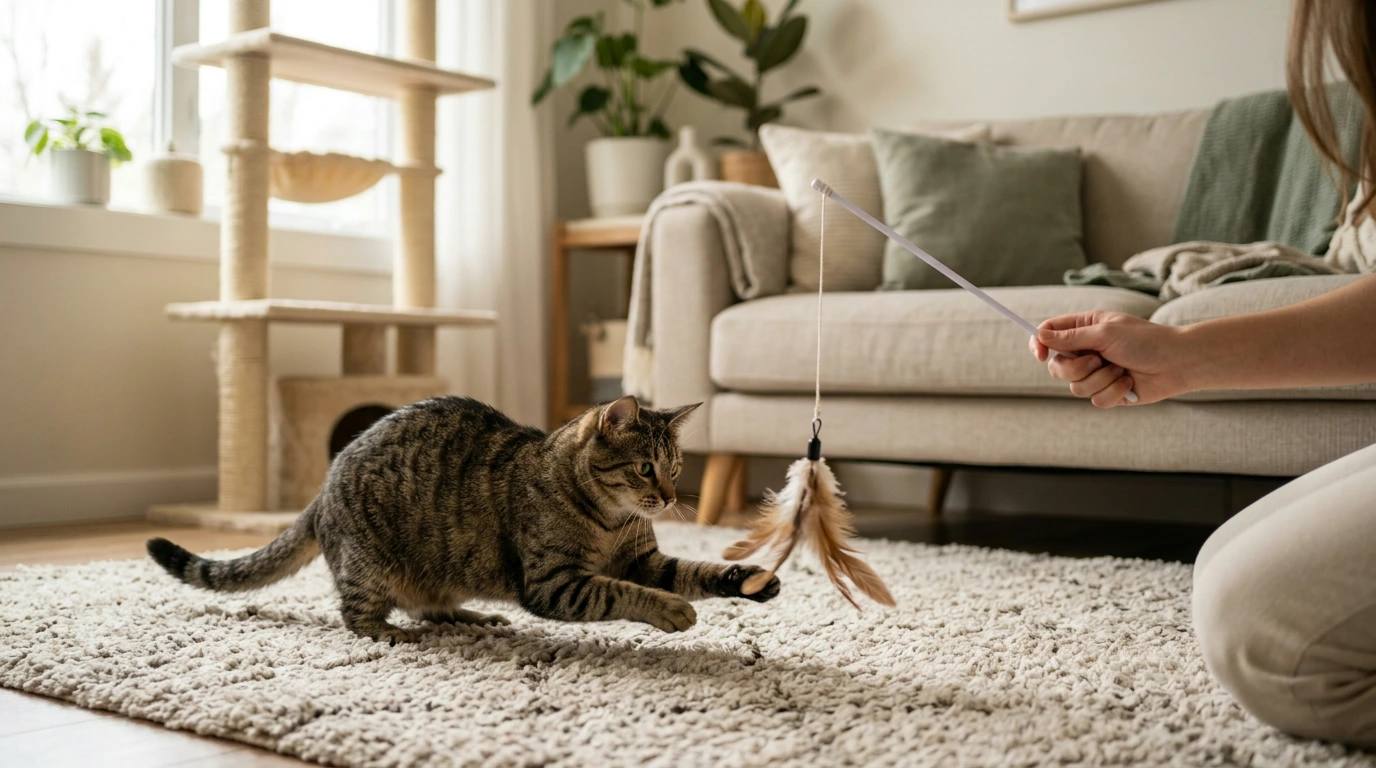
Feather Cat Teasing Stick: Interactive Play for Healthy, Happy Cats
A feather teasing stick is a simple way to turn everyday playtime into a satisfying chase, pounce, and capture routine. It helps indoor cats burn energy, practice natural hunting behaviors, and build confidence—while keeping hands at a comfortable distance from claws and teeth. This guide covers what to look for, how to use it well, and how to keep play safe and engaging.
Why feather wand play matters
Cats are wired to hunt in short, intense bursts. A feather wand gives that instinct a safe, structured outlet—especially for indoor cats with fewer chances to stalk and chase.
- Encourages full-body movement: sprinting, jumping, and quick turns that support healthy weight and mobility.
- Provides mental enrichment: the lure’s “prey” behavior rewards focus, timing, and problem-solving.
- Can reduce boredom behaviors: offering a predictable outlet may help with excessive meowing, furniture scratching, and nighttime zoomies.
- Strengthens your bond: short, positive sessions build trust and communication—especially when play ends on a “win.”
For more on daily care and enrichment, see guidance from the American Veterinary Medical Association (AVMA) and the Cornell Feline Health Center.
What makes a good feather cat teasing stick
Not all teasing sticks feel the same in your hand—or hold up the same when a cat gets excited. A few practical design details make play smoother and safer.
- Comfortable handle and enough reach: keeps play dynamic without hovering over your cat.
- A fluttery lure (feathers/streamers): unpredictable movement triggers chase instincts.
- Secure connection point: reduces breakage and loose bits; replaceable lures are a nice bonus.
- Lightweight feel: supports longer sessions without wrist fatigue.
- Easy-to-inspect materials: avoid toys with loose parts that could be swallowed if damaged.
Quick checklist for choosing and using a teasing stick
| Feature | Why it helps | Tip |
|---|---|---|
| Long handle | Creates distance and bigger “hunt” patterns | Vary height and direction to keep movement unpredictable |
| Fluttery feather lure | Triggers stalking and pouncing | Skim it along the floor, then make it “escape” around a corner |
| Secure attachment | Reduces breakage and loose pieces | Inspect knots/clips before each session |
| Lightweight build | Improves control and comfort | Use quick wrist flicks rather than large arm swings |
| Easy storage | Prevents unsupervised chewing | Store in a drawer or hang out of reach |
How to play so it feels like a real hunt
The biggest difference between “waving a toy” and truly satisfying play is pacing. A convincing hunt includes pauses, sudden bursts, and a capture moment. If the lure moves nonstop, many cats lose interest—or get overstimulated.
- Start slow: let your cat notice the lure, then move it away in short, prey-like bursts.
- Use the environment: drag the lure behind furniture edges, up a cat tree, or around doorways so it “hides.”
- Build a cycle: stalk → chase → pounce → brief “catch” moment; repeat several times.
- End with a payoff: allow a final capture, then offer a small treat or meal to match hunt-then-eat satisfaction.
- Keep it short and frequent: many cats do best with 5–10 minutes, 1–3 times daily.
If your cat tends to “attack the wand” instead of the lure, keep your hands still and low, and emphasize ground-level movement so the target stays the feathers—not the handle.
Safety and care essentials
Teasing sticks are meant for supervised play. A few habits help prevent accidental injuries and reduce the chance of swallowed strings or feathers.
- Supervise every session: teasing sticks are interactive toys, not solo toys.
- Avoid face-level swings: keep movements low and to the side to protect eyes.
- Put it away afterward: prevents chewing feathers, strings, or attachments when you’re not watching.
- Inspect regularly: frayed string, loose feathers, cracked handles, or tiny parts are reasons to replace the toy.
- Adjust for slippery floors: for kittens and high-drive cats, increase “ground play” to reduce risky vertical leaps.
General cat safety guidance from the ASPCA can also help you build a safe, consistent routine around play and the home environment.
Making play work for different cats
Two cats can react very differently to the same feather lure. Small adjustments keep play fun, not frustrating.
Product spotlight: Feather Cat Teasing Stick
For an easy, everyday way to add structured enrichment, the Feather Cat Teasing Stick is designed for interactive chase-and-pounce sessions. It’s especially useful for indoor cats that benefit from predictable, daily play.
Optional add-on for humans: stay comfortable during playtime
If you’re doing multiple play sessions a day (especially in cooler months), having something cozy nearby can make it easier to stick to the routine. The Nike Men’s Pink Sweatshirt with Print is a simple comfort pick for longer, relaxed interactive play sessions at home.
FAQ
How long should a teasing stick play session be?
Most cats do best with 5–10 minutes per session, 1–3 times a day. End on a successful “catch,” then transition into a calm-down with a small treat or meal.
Is it safe to leave a feather teasing stick out for my cat to play with alone?
No—teasing sticks are designed for supervised interaction because feathers, strings, and attachments can be chewed or swallowed. Put the toy away after play and offer sturdier solo toys for independent time.
Why does my cat walk away after a minute of chasing?
This can happen due to overstimulation, fatigue, or boredom from repetitive movement. Try slowing down, adding hiding/escape patterns, keeping sessions shorter, and rotating toys so the “prey” feels fresh.









Leave a comment