4-Week Puppy Training Plan: Potty, Crate, Commands
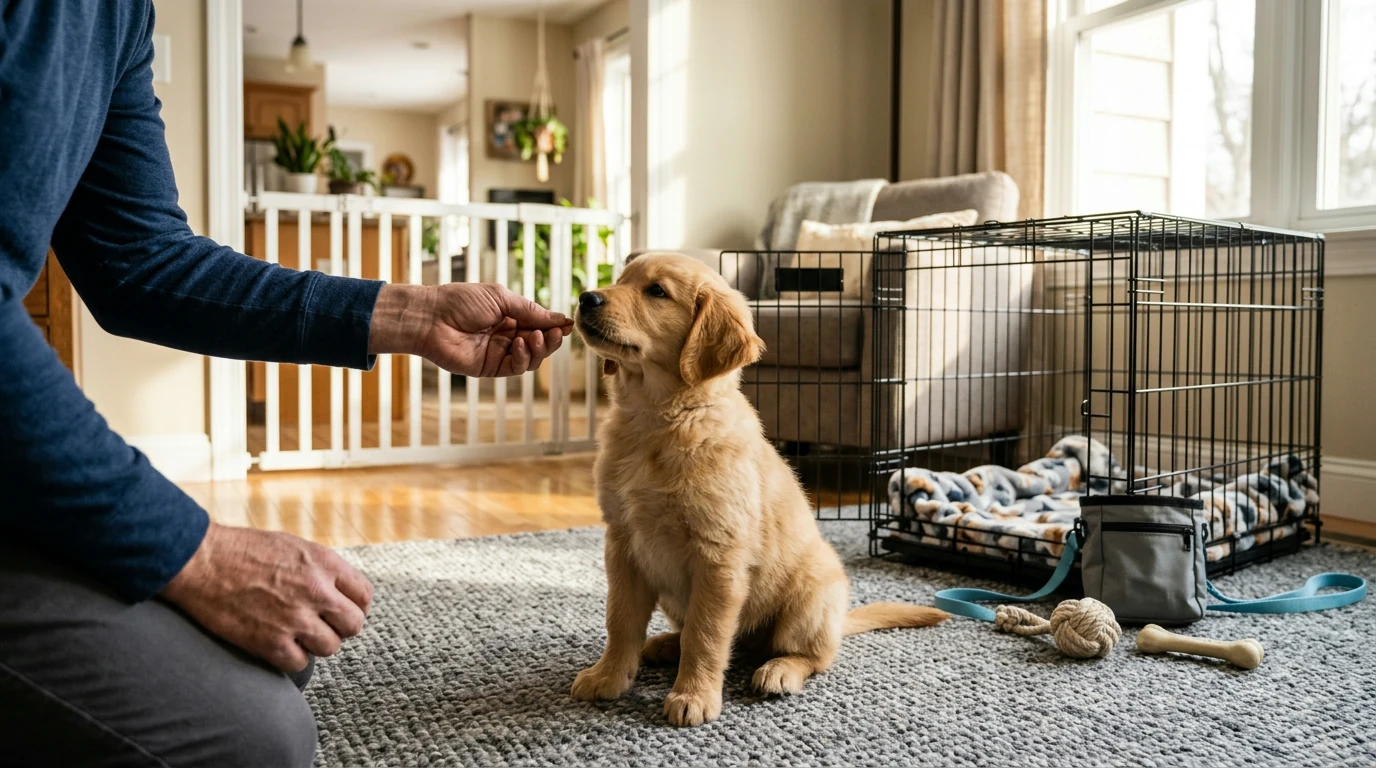
New Puppy Training Starter Guide: A 4-Week Routine for House-Training, Basic Commands, and Social Confidence
A new puppy learns fastest when training is simple, consistent, and built into everyday life. The goal for the first month isn’t perfection—it’s building repeatable habits: where to potty, how to relax, and how to earn rewards for good choices. Below is a beginner-friendly 4-week routine with house-training, crate support, foundational cues, social confidence goals, and quick troubleshooting steps.
What “good training” looks like in the first month
Good training early on looks boring in the best way: predictable sleep, potty breaks, meals, play, mini training moments, and calm downtime. Instead of waiting to correct mistakes, set up management that prevents them—close supervision, baby gates, a pen, and a schedule that makes success likely.
Keep reward-based sessions short (often 30–90 seconds). Mark the exact moment your puppy does the right thing (“Yes” or a click) and pay with a tiny treat, toy, or praise. Progress shows up as patterns: fewer indoor accidents, quicker response to their name, calmer handling, and faster settling after excitement.
Set up the home for success before training begins
Before you ask your puppy to “be good,” make it easy to be right.
- Create two zones: (1) a safe confinement area (crate/pen) and (2) a supervised play/training area.
- Pick one consistent potty spot outside. Use a leash at first to reduce wandering and distractions.
- Choose a marker word (like “Yes”) or use a clicker. Everyone in the household should use the same marker.
- Stock essentials: enzyme cleaner for accidents, chew toys with different textures, a treat pouch, a lightweight leash, and baby gates.
- Agree on household rules now (furniture, feeding times, where the puppy sleeps) to avoid mixed messages.
House-training and crate routine: the simplest schedule that works
House-training is mostly timing and supervision. A reliable baseline is taking your puppy out after waking, after eating or drinking, after play, after training, and right before/after crating. Use one potty cue (“Go potty”), wait quietly, then reward immediately after they finish.
If an accident happens: if you catch them mid-stream, interrupt gently (a soft “oops”), scoop them up, and go straight outside. Clean the spot thoroughly with an enzyme cleaner, then tighten supervision and increase potty breaks for a few days.
Crate training works best when it’s short and positive. Feed meals near or in the crate, give a safe chew, and build duration gradually. Avoid using the crate for punishment—your puppy should feel like the crate predicts rest and good things.
| Time/Trigger | What to do | Goal |
|---|---|---|
| Wake up (nap or morning) | Leash to potty spot, cue, reward | Build a fast habit and fewer accidents |
| After meals (5–15 min) | Potty trip + calm praise | Teach body rhythm and predictability |
| After active play | Potty trip before free roaming | Prevent excitement accidents |
| Before crating | Potty trip, then crate with chew | Settle and reduce whining |
| Overnight (as needed) | Quiet potty break, minimal talking | Keep nights boring and quick |
Week-by-week plan: focus skills without overwhelming your puppy
Week 1: Bonding + basics
Build trust and routine. Play the name game, reward check-ins, and practice gentle handling (touch paws, ears, mouth for 1–2 seconds, treat, then stop). Introduce the crate with treats and short rests, and practice tiny “alone time” moments while you step away and return before stress escalates.
Week 2: Sit/Down + polite greetings
Add “Sit” and “Down” with simple lures. Begin leash comfort indoors (wearing it, following you for a treat). Start calm greeting practice: reward four paws on the floor, and calmly pause attention if jumping starts.
Week 3: Come + Leave it foundations
Teach “Come” indoors like a game—happy voice, back up, reward big. Add “Leave it” with a closed fist and reward disengagement. Strengthen “settle” by rewarding your puppy for relaxing on a mat for a second or two, then gradually longer.
Week 4: Real-life mini practice
Core commands for beginners: teach the “why” behind each cue
Socialization and confidence: safe exposure, not forced interaction
For health-aware outings, follow veterinary guidance on vaccination timing and choose lower-risk environments when needed. For more detail, see the American Veterinary Society of Animal Behavior (AVSAB) position statement on puppy socialization, the American Kennel Club’s puppy training basics, and the Humane Society’s house-training guidance.
Common problems and quick fixes
Printable routine support: turn daily training into a checklist
If you want a day-by-day layout you can print and follow, see the New Puppy Training Starter Guide (Printable 4-Week Routine eBook). For households that like structured checklists in other areas too, you can also browse Step-by-Step Career Development Guide – Professional Growth eBook and The Smart Traveler’s Guide to Global Etiquette.
FAQ
How often should a puppy go outside for potty training?
Start with potty trips after waking, after meals (within 5–15 minutes), after drinking, after play, after training, and before/after crate time. Adjust based on age and your puppy’s patterns, and reward immediately after they finish outside to make the habit stick.
When can a puppy start learning commands like sit and come?
Right away, as soon as your puppy is home. Keep sessions extremely short, use food or toy rewards, and focus on simple luring and fun recall games that make responding feel worth it.
How much socialization does a puppy need in the first month?
Aim for frequent, low-pressure exposures where your puppy stays under threshold and can eat treats comfortably. Quality and safety matter more than forced greetings—use distance, pair new things with rewards, and end sessions before your puppy feels overwhelmed.












Leave a comment